
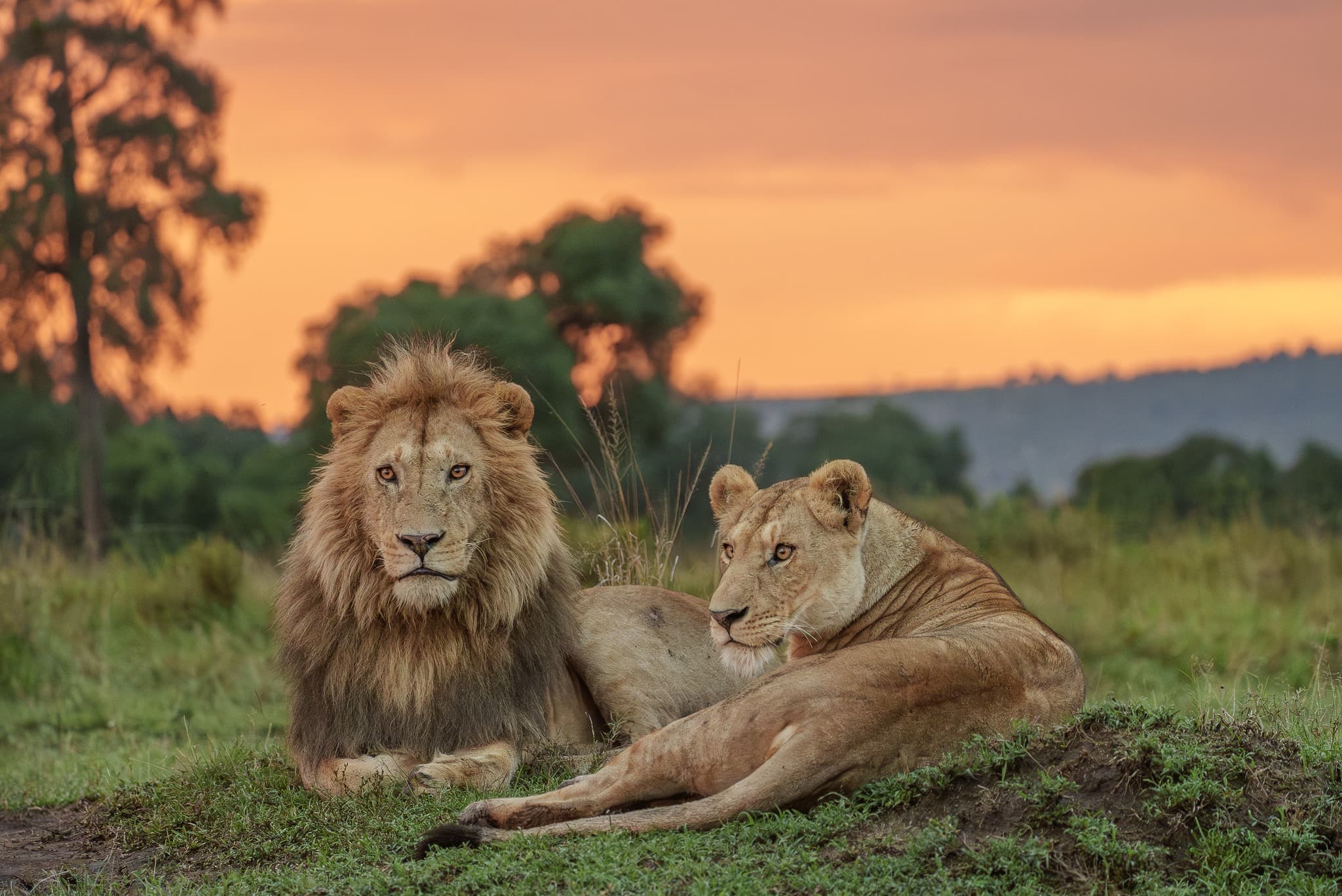

For most of April I was parked, before light, on a low rise above the Musiara Marsh, waiting for fourteen lions to decide what kind of day it was going to be. This is not a hardship. It is, in fact, the whole job.
The Marsh Pride is the most-filmed family of lions on Earth, and people arrive in the Mara expecting them to behave like television. They do not. A pride spends roughly twenty hours of every day doing almost nothing, and the four hours that remain are split unevenly between the hour before sunrise and the hour after sundown — windows most visitors, understandably, sleep through.
The single most useful thing I can tell anyone coming on safari is this: be in the vehicle in the dark.
The hour nobody is awake for
By the time the light is good enough for a phone camera, the cats are usually flat on their sides under a croton bush, digesting, and they will stay there until the afternoon cools. What you came to see — the hunt, the greeting ceremonies, the cubs testing the adults' patience — happens in the grey half-hour when the grass is still wet. We leave camp at five-thirty. People grumble. People stop grumbling.

What three weeks taught me
- The pride moved an average of four kilometres a night — far more than the daylight stillness suggests.
- Cubs initiate roughly nine in ten of the social interactions you will photograph. Find the cubs, find the action.
- A successful hunt is rarer than the documentaries imply. We saw eleven attempts and three kills in nineteen days.
- The best frames came on the two overcast mornings, not the golden ones. Flat light is a gift, not a setback.
None of this is a secret to the guides who live here. But it is the difference between a good safari and a great one, and it costs nothing but an early alarm. If you take one thing from this dispatch, take the alarm.
Plan a trip like this
Our 3-day Masai Mara and 7-day Kenya Highlights departures both put you in the reserve at first light with a guide who knows the resident prides by name. Browse the Kenya safaris →

Comments
Leave a reply
Your email address will not be published. Required fields are marked *. Please keep discussions respectful — see our community guidelines.