
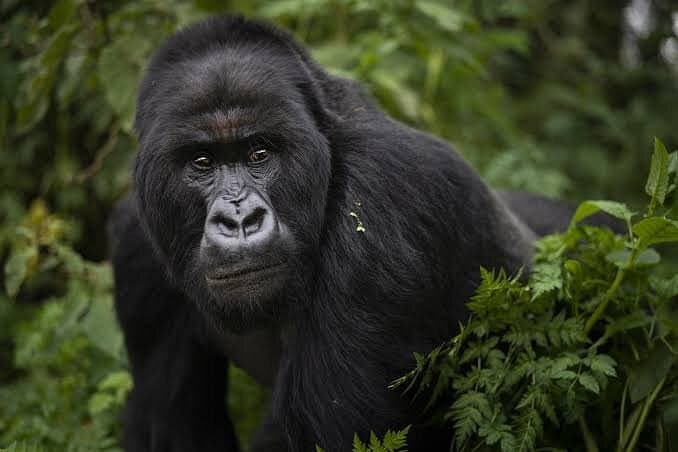

In the 1980s, fewer than 250 mountain gorillas remained alive on Earth. The species was, by any honest assessment, heading towards extinction — lost to habitat destruction, poaching, disease and the civil conflict that made effective conservation in the Virunga mountains nearly impossible.
Today, the mountain gorilla population stands at around 1,063 individuals — the only great ape whose numbers are increasing. That reversal is one of the most remarkable conservation achievements in modern natural history, and it matters profoundly to anyone thinking about a gorilla trek in Uganda or Rwanda.
How it happened
The recovery of the mountain gorilla did not happen by accident or by the intervention of distant conservation organisations writing reports in Europe. It happened because local communities — Ugandan, Rwandan and Congolese — decided that a living gorilla was worth more than a dead one, and that their forests were more valuable intact than cleared.
The mechanism that made this possible was gorilla tourism. A gorilla trekking permit — $800 in Uganda, $1,500 in Rwanda — channels money directly into park management, anti-poaching patrols, ranger salaries and community benefit programmes. Local communities adjacent to Bwindi and the Virungas now have concrete economic reasons to protect what is in the forest. When a gorilla is worth more alive, it lives.
Habituation — the process that makes trekking possible
The gorillas you will encounter on a trek are not wild in the sense that they are unaware of humans. They are habituated — a multi-year process in which research teams and rangers gradually acclimatise a gorilla family to human presence until the animals tolerate visitors at close range without stress or behavioural change.
Habituation takes 2–3 years per family and is conducted by the Uganda Wildlife Authority and Rwanda Development Board. Only habituated families are visited on treks; unhabituated families are never approached. The rules that govern the one-hour encounter — no flash photography, no food, a minimum distance of 7 metres, a maximum of 8 visitors per family per day — exist because the welfare of the gorillas is not a marketing pledge. It is the legal condition of the experience.
What this means for the trek itself
When you sit a few metres from a silverback and watch him regard you with what can only be described as thoughtful indifference, you are the beneficiary of forty years of conservation effort, community engagement and — yes — tourist revenue. The encounter is not separate from its conservation context. It is inseparable from it.
The gorilla looking back at you exists because someone decided to protect the forest it lives in. Your permit is one of the reasons that decision held.
I say this not to make a trek feel heavy with obligation. I say it because understanding the backstory makes the encounter — which is extraordinary in its own right — genuinely moving in a way that a purely transactional tourist experience never is.
The species in brief
Mountain gorillas (Gorilla beringei beringei) live only in the Virunga Massif and Bwindi Impenetrable Forest — two geographically separate areas in Uganda, Rwanda and the Democratic Republic of Congo. They are distinct from lowland gorillas and are the only great ape that cannot survive in captivity: there are no mountain gorillas in zoos anywhere in the world. The gorillas you encounter on a trek are some of the last of their kind on Earth, and the only ones accessible to visitors.
We arrange gorilla trekking in both Uganda and Rwanda, including permits secured months in advance. Uganda gorilla treks → · Rwanda gorilla treks →

Comments
Leave a reply
Your email address will not be published. Required fields are marked *. Please keep discussions respectful — see our community guidelines.